Wonder Woman: The UN Ambassador
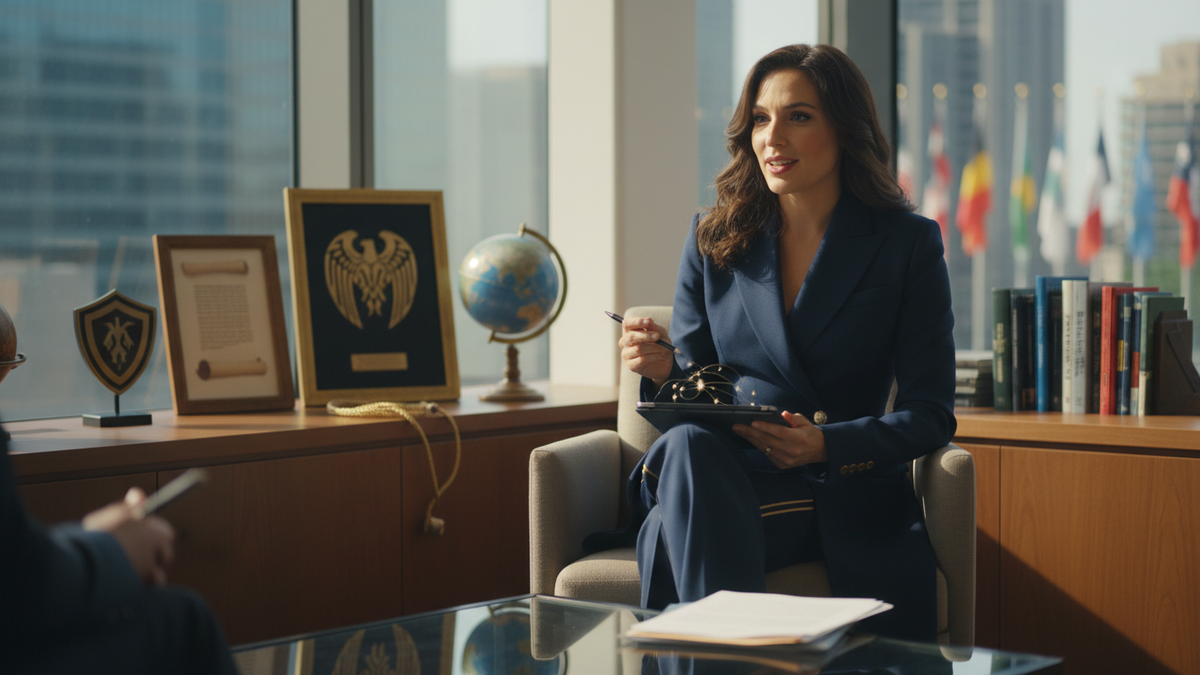
Diana Prince’s office at the United Nations overlooks the East River, but she rarely has time to enjoy the view. As the Special Ambassador for Peace and Understanding, her days are filled with meetings, negotiations, and the delicate work of bridge-building between nations and cultures.
“The work is slower than I expected,” Diana admits, reviewing a stack of briefing documents. “When you’re fighting physical threats, progress is immediate and visible. This work? Sometimes you labor for months for a single breakthrough, and even then, you’re never quite sure if it will hold.”
Her appointment to the role came after years of advocating for peaceful solutions alongside her more visible hero work. Diana realized that while she could stop individual conflicts, lasting peace required different tools—dialogue, understanding, and systemic change.
“I can intervene in a battle and save lives. That’s important work. But what happens after I leave? The same tensions remain, the same misunderstandings. I wanted to address the root causes, not just the symptoms.”
The role has required Diana to refine skills she’d previously taken for granted. Her warrior training emphasized decisive action; diplomacy requires patience. Her immortal perspective sometimes clashes with the urgency of mortal timelines. And her directness—a valued trait in battle—needed considerable softening for negotiation tables.
“My first few months were… educational,” Diana says with a slight smile. “I told one ambassador that his position was ‘strategically foolish and morally indefensible.’ Technically true, but not diplomatically effective. I’ve learned there are ways to say the same thing that leave room for people to change their minds with dignity intact.”
She’s leveraged her unique background—Amazon warrior, hero, and diplomat—to access spaces and conversations others cannot. Warlords who wouldn’t speak to traditional diplomats will meet with Wonder Woman. Youth movements trust her in ways they don’t trust typical UN officials. She operates in the gaps of conventional diplomacy.
Her focus has been on three main areas: women’s rights and protection in conflict zones, climate displacement and resource conflicts, and what she calls “inherited conflicts”—disputes so old that current generations barely remember their origins but continue fighting nonetheless.
“That last category is particularly close to my heart. I’ve watched humanity repeat the same cycles of violence for millennia. Grudges passed down through generations, each side convinced of their righteousness. Breaking these cycles requires not just solving the current dispute but healing historical wounds.”
The work has its frustrations. Diana speaks frankly about the bureaucracy, the political calculations that sometimes override moral clarity, and the agonizing slowness of institutional change. She’s had to learn when to push, when to wait, and when to work around obstacles entirely.
“There are days when I want to simply grab people and shake them until they see reason,” she admits. “But that’s not the answer. Lasting change comes from within, from people choosing better paths. My job is to create conditions where that choice becomes easier.”
Her approach combines her Amazon training with modern conflict resolution techniques. She’s studied everything from restorative justice practices to organizational psychology. Her office walls display both ancient Amazon scrolls and contemporary academic texts.
Between official duties, Diana runs training programs for young women from conflict zones, teaching leadership and conflict resolution. These workshops combine practical skills with what she calls “warrior wisdom”—not about fighting, but about strength, resilience, and standing for your principles without demonizing your opponents.
“The girls who go through our program don’t just return home with new skills. They return with a different understanding of power and how to wield it. Many are now leading peace initiatives in their own communities.”
When asked about her greatest achievement in this role, Diana points not to any high-profile peace accord but to a small village in West Africa where former child soldiers and their victims’ families now work together on community projects, facilitated by methods Diana helped develop.
“That’s what success looks like. Not grand treaties between nations, though those matter too. But people who had every reason to hate each other choosing instead to build something new together. If we can help that happen in one village, we can help it happen anywhere.”
Looking ahead, Diana is pushing for a new initiative focused on preventive diplomacy—addressing potential conflicts before they erupt into violence. It’s ambitious and faces considerable skepticism, but she’s undeterred.
“I’ve been fighting for thousands of years. I’ve learned that the best fight is the one you prevent. That’s the work I want to do now. Not stopping wars, but preventing them from starting at all.”