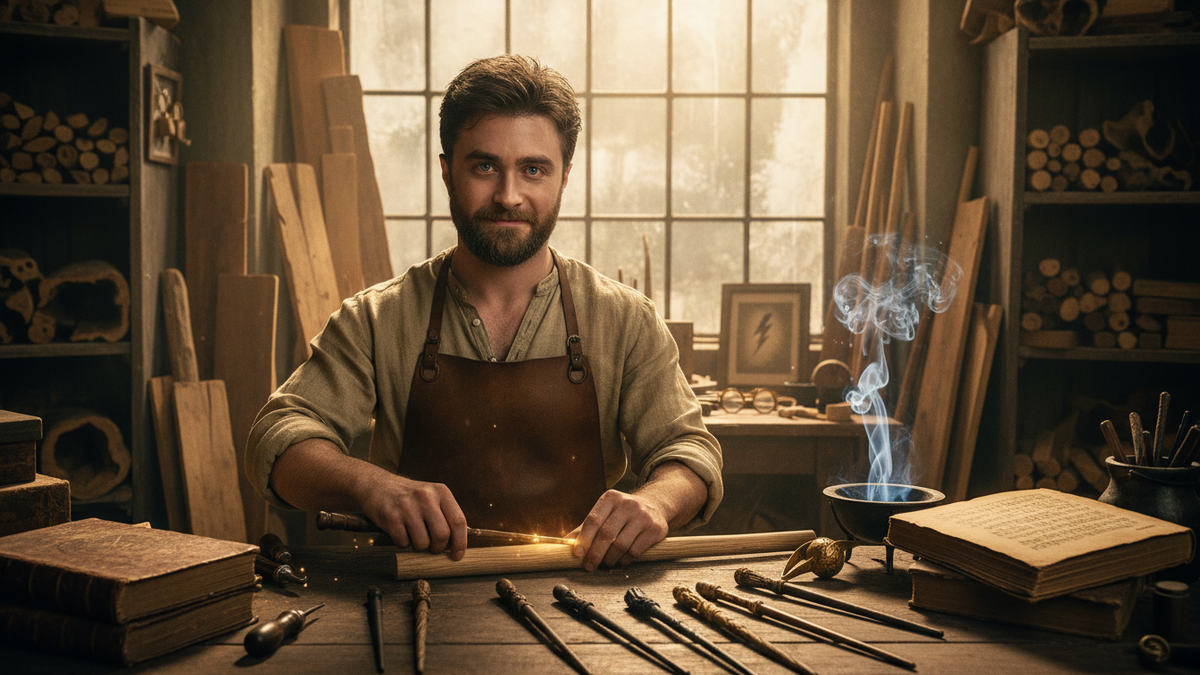
Harry Potter: The Wand Maker
In a workshop behind his home in Godric’s Hollow, Harry Potter runs his hand along a piece of elder wood, feeling for something only a wand maker would recognize. The room smells of fresh-cut wood, oils, and something indefinable—magic itself, perhaps, waiting to be shaped.
“Ollivander once told me the wand chooses the wizard,” Harry says, carefully examining the wood’s grain. “I never really understood what he meant until I started doing this work. There’s a conversation that happens between the wood, the core, and the eventual owner. My job is to facilitate that conversation.”
His path to wand-making wasn’t direct. After the war, Harry spent years as an Auror, eventually rising to department head. It was meaningful work, but something felt incomplete. A chance encounter with Ollivander’s successor sparked a curiosity that grew into passion and eventually into a second career.
“I’d used wands my whole life but never really understood them. I knew my wand, its history, what it meant that it chose me. But the deeper magic of wand-making? That was a mystery. And I’ve never been good at leaving mysteries alone.”
He apprenticed for three years, learning not just the technical aspects but the philosophy behind the craft. Wand-making, Harry discovered, requires equal parts skill, intuition, and patience—qualities his Auror work hadn’t necessarily cultivated.
“The first wand I made alone was terrible,” Harry laughs. “Technically perfect, but it had no soul. It worked, sort of, but there was no connection. My master told me I was making it with my head instead of my heart. I had to unlearn a lot of what Auror training taught me about control and precision.”
His workshop is selective—he makes perhaps twenty wands a year, each one commissioned and custom-crafted. The process begins with meeting the future owner, understanding not just their magical abilities but their character, their story, their potential.
“A wand isn’t just a tool. It’s a partner. I need to understand who this person is and who they’re becoming. Sometimes I turn down commissions because I can’t see that clearly yet. Sometimes I ask people to come back in six months, after they’ve grown more into themselves.”
The cores he uses come from various sources—phoenix feathers from Fawkes’s descendants, unicorn hairs from the Forbidden Forest (ethically sourced, he insists), and dragon heartstrings from reserves that work with retired dragons. Each material brings its own properties and requires different handling.
“There’s no formula. A phoenix feather that works beautifully in oak might be completely wrong in willow. And what works for one person might be disastrous for another. It’s constant learning, constant adjustment.”
Harry’s most unconventional practice is his insistence on following up with every wand owner a year after the sale. He wants to know how the relationship is developing, if any adjustments are needed. Most wand makers would consider this excessive, but Harry sees it as essential.
“These are pieces of my work going out into the world, forming bonds with wizards and witches, shaping their magic. Why wouldn’t I want to know how that’s going? Plus, I learn something from every follow-up that improves my next wand.”
He’s also been quietly working with Muggle-born students, helping them understand the deeper connection with their wands—something often overlooked in traditional magical education. These sessions combine wand care with magical philosophy and history.
“Many Muggle-borns see their wands as tools to master rather than partners to understand. It’s a small shift in perspective, but it makes a huge difference in their magical development. Hermione says I’m being sentimental. She’s probably right, but it still matters.”
Between commissions, Harry has been documenting wand lore from various magical cultures—not to appropriate, but to understand the universal principles that underlie different traditions. His notes fill dozens of journals, organized in a way that would make Hermione proud.
The work has also been personally healing. Creating something with his hands, putting magic into the world that helps rather than harms, has addressed wounds Harry didn’t fully realize he carried.
“For so long, magic in my life was about fighting, defending, surviving. This is different. This is about creation, connection, helping people find their power. It’s the magic I wish I’d known first.”
His most prized creation isn’t for sale. It’s a practice wand, one he remakes every few months, each version incorporating something new he’s learned. The current iteration sits on his workbench, imperfect but honest.
“That wand reminds me that I’m still learning, still growing. Still becoming. That’s what magic should be—not a destination but a journey. And if I can help others understand that through the wands I make, then I’m doing exactly what I’m supposed to be doing.”